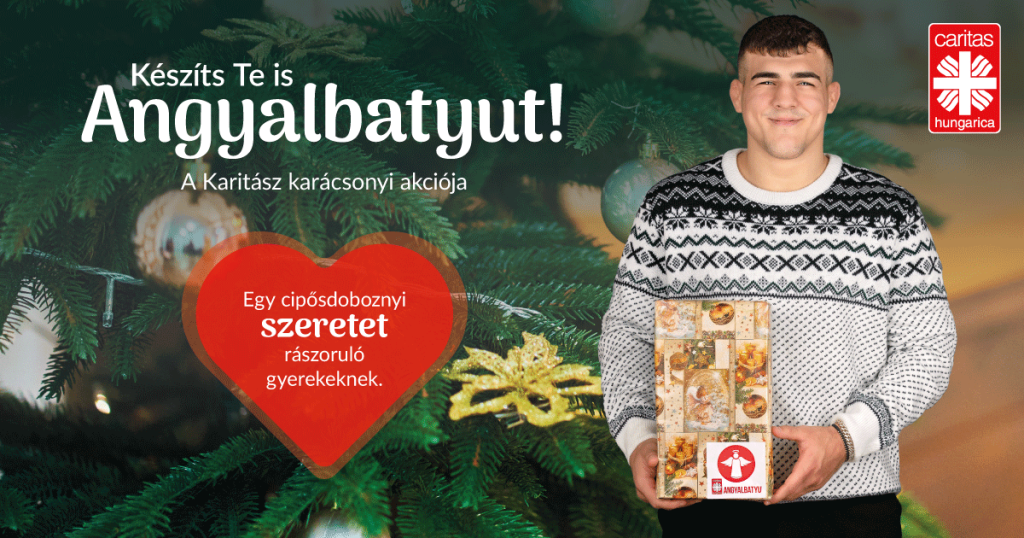
We are facing a significant period, on the threshold of Advent Catholic Caritas Advent aid programmes have begun: “Open Your Hearts!”, the “Angel Parcel”, and we can also join the “One Million Stars for the Poor” programme.
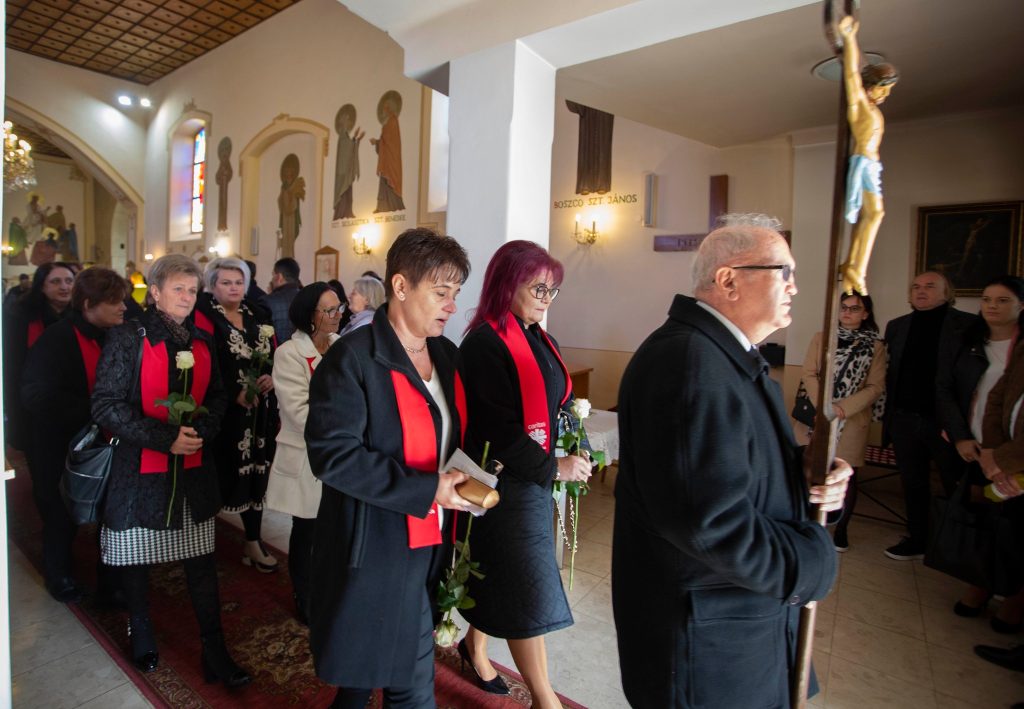
Volunteers of the Debrecen-Nyíregyháza Diocesan Caritas, in connection with the feast of Saint Elizabeth of Hungary, on 16/11 in Ófehértó, prepared for the upcoming period on a spiritual day. At the event, we spoke with Gábor Csordás, Diocesan Caritas Director, about the charitable service.
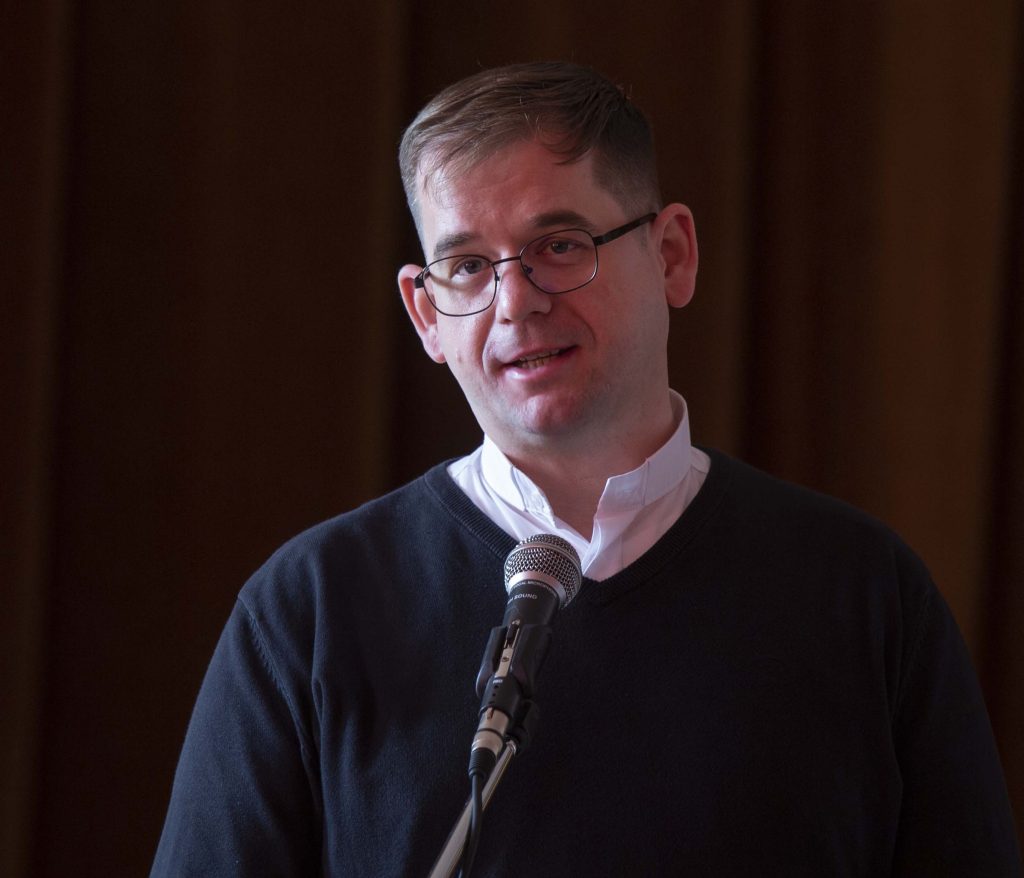
– Caritas helps those in need not only during Advent but throughout the year. This period is more significant in that, as Christmas approaches, people are more open and willing to donate, and it is our duty to take advantage of this opportunity to deliver their donations to those in need.
However, in Christian tradition, the true season of giving is Lent, where, alongside prayer and fasting, almsgiving is also a duty for Christians.
– The Advent weeks are also particularly prominent in the service of Caritas staff.
– We participate in several non-perishable food collection drives, and also receive donations through the Hungarian Food Bank. Many people, at this time – though not members of Caritas – stand more firmly by the cause as members of a community, family members, or through the parish, and offer help.
Caritas also consists of concentric circles; some participate regularly in the community's work, and some only help occasionally.
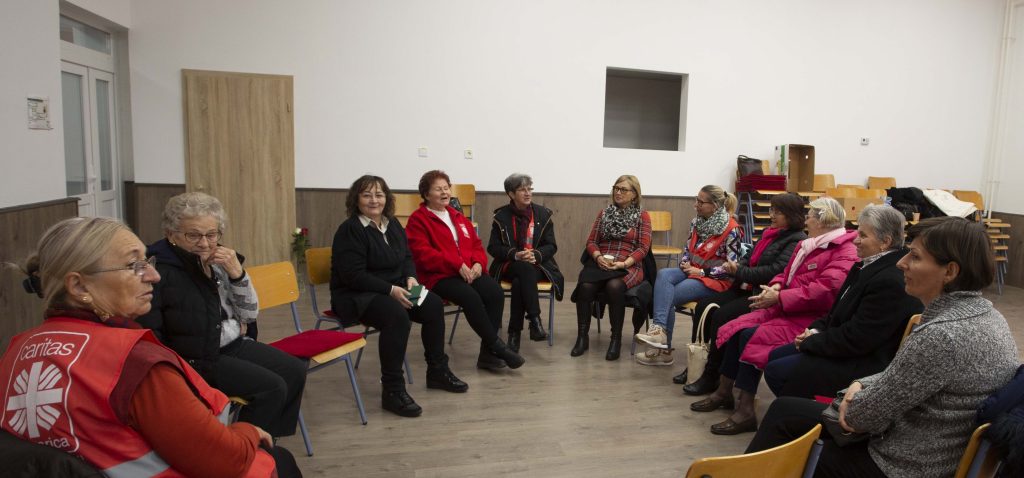
– Volunteers of the Diocesan Caritas received encouragement and impetus for the upcoming period through the life example of Saint Elizabeth of Hungary on a spiritual day.
– The figure of Saint Elizabeth better opens and expands hearts, not only of donors but also of those involved in charitable service.
The large Caritas community of the diocese meets twice a year for spiritual and professional days.
The figure of Saint Elizabeth is not overly romanticised; she helped amidst difficulties and tribulations. She was betrothed at the age of 4 and raised in a foreign family on German soil; from her childhood, she helped the poor, which earned the displeasure of the palace. She faced rejection, married young, then became a widow, eventually became a beggar herself, and died at the age of 24. Thus, she was not a romantic figure but a princess who lived a hard life.
Anyone who has tried charitable service knows that it contains more difficult situations than romantic ones.
– Although it is everyone's duty to help those in need, not everyone is suited for the direct practice of charitable service. Caritas staff report very heartbreaking everyday examples.
– This is already the professional aspect of the matter. Volunteers must learn to maintain a certain distance in each situation. This is a special task for those working in helping professions: to be present without fully immersing themselves. We also discuss these matters in professional trainings, but groups also help in this. It is no coincidence that we think in terms of groups in charitable service, because it makes a difference whether one has to be present alone in such a situation, or with a colleague, or even as a group to deal with each case. This is the strength of the community.
– What opportunities does the Diocesan Caritas have to help those in need?
– We participate in the aforementioned national initiatives, and furthermore, thanks to a substantial donation from the Debrecen-Nyíregyháza Diocese, we prepare food packages for hundreds of families year after year. Additionally, we place special emphasis on the cold season. We provide support for heating fuel, applications for stoves can be submitted through Caritas groups, and in some cases, we also provide opportunities to support utility bills.
There are disadvantaged and more affluent settlements. We also pay attention to this difference. In a more affluent settlement, it is easier to find resources than in cases of those living in more difficult circumstances; in such cases, we centrally support the families living there.
– The work of Caritas is diverse; they are involved not only in collecting and distributing donations.
– The primary task of Caritas members is not merely the distribution of donations, but also, following the example of Saint Elizabeth, embracing the spiritually poor and practising the works of mercy. Jesus will hold us accountable, referring to Himself: “when I was thirsty, did you give me drink, when I was naked, did you clothe me…”
Loneliness is also a serious social problem, which is why it is very important, for example, in the life of an elderly person if our volunteers visit them with a package. Elderly people usually appreciate the encounter and conversation more than the donation itself. Furthermore, our staff help with bureaucracy; many cannot interpret forms that need to be filled out. We provided significant help to Transcarpathian families fleeing the war and settling here, as they were unfamiliar with the system operating in our country. Beyond financial and material aid, this type of support is also very important. It is also a gesture of charity if our volunteers protect, for example, the elderly from fraudsters.
– In our diocese, we are talking about large numbers regarding the volunteer strength of Caritas. Out of 59 groups, 45 active groups operate with nearly 1,000 volunteers.
– In each Caritas group, 8-10 people work regularly, but in a larger project, another 10-20 people from the family or parish may join the cause. Therefore, it is difficult to talk about exact numbers. The 1,000-strong number includes those who join the service several times a year. In the 45 active groups, approximately 600 people regularly participate in helping those in need.
– The re-established Kisvárda group was also welcomed at the diocesan spiritual day.
– The Kisvárda group was somewhat active in the past period. The death of their group leader greatly affected the group, and they have now re-organised.
The groups operate strictly within the framework of the parish under the direction of the parish priest. In the life of the parish, the Caritas group can be a source of ease, as active Caritas members are present at church patronal feasts or any event and help the parish, cooking, baking cakes, etc. In many respects, the parish priest can rely on them.
– Father Gábor, in addition to your parochial duties, you have been leading the Caritas community of the Debrecen-Nyíregyháza Diocese since August 2020. What has been your experience, and how does Caritas enrich the wider community of the diocese?
– Primarily, I am a parish priest. Initially, leading the service was difficult, but it has become less of a burden as everything slowly falls into place. In Nyíregyháza, we established the Caritas centre operating with a 3,000 m2 warehouse on Tábor Street; the staff are also doing their work, and I see its fruits.
As a pastor, my experience is that the
charitable service provides immense community-building power and momentum not only to parishes but also to individuals.
Let's face it, ordinary people are practical; while they know that Christians attend church, pray, etc., it is important that they can also express their faith through active charity.
What strength there is in this! It is often said that the treasures of the Church are the poor and those who minister to them, because they take their Christianity seriously.
We know from the legend of Saint Lawrence the Martyr that when the emperor's soldiers wanted to seize the Church's property, Lawrence brought forth the sick and the poor, saying that they were the Church's treasures.
Caritas is a functioning, living community, connecting with the pulse of the Church. Most of our volunteers perform their service with the knowledge that they approach those in need in the name of the Church and also provide spiritual nourishment, not merely handing over a package.
Ágnes Kovács
Joyful News Press Office/Debrecen-Nyíregyháza Diocese