The town's medieval Roman Rite church was built around 1250 and, according to data from 1411, it was rebuilt (Byzantine Christian faithful had lived here since the time of the Hungarian conquest). After Prince Bocskai settled Hajdú warriors in the town, the Calvinists began to use the church in the 17th century. The Archbishop of Eger made several unsuccessful attempts to reclaim it. The Calvinists used the old church until 1873, when they demolished it and built a new church in its place. The resurgence of the Catholic faith was further delayed by the Roman Catholic patron, Count Ferenc Károlyi, who settled Lutheran Slovaks and Tirpáks from the vicinity of Szarvas, who lived an active religious life. Through the efforts of Ferenc Barkóczy, Archbishop of Eger, a Roman Catholic priest arrived in Nyíregyháza in 1755. He had a small Baroque chapel built adjacent to his residence, the foundation stone of which was laid in 1783. In 1786, it once again became an independent parish, and its first parish priest was András Dolhai. Its Baroque church was built in 1815 according to the plans of Ignác Frantz, an architect from Tokaj, and was consecrated in honour of the Ascension of Our Lord. In the 18th and 19th centuries, the Catholic population began to grow steadily, and therefore, a century after the laying of the foundation stone, the faithful of Nyíregyháza desired a larger, more dignified church for themselves. Fundraising for this began during the Millennium celebrations. A true milestone was the Holy Mass celebrated by József Samassa, Archbishop of Eger, in Nyíregyháza on the occasion of his 50th year of priestly service. On this occasion, he promised the faithful of Nyíregyháza that in remembrance of his Golden Jubilee of Priesthood, he would have a monumental church built in Nyíregyháza, which he would dedicate in honour of Our Lady of Hungary. The church, realised according to the intention of the donating Archbishop, stands as a memorial to the history and saints of the Hungarian people. Architects Virgil Nagy and József Kommer were commissioned for the design. Károly Godnautz was the contractor. Its consecration was performed by the donating Archbishop himself on 20 August 1904, on the Feast of the Foundation of the State.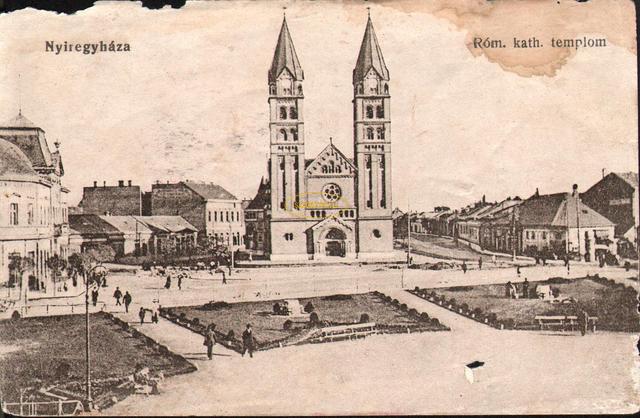
In the 20th century, ecclesiastical life in the town flourished more than ever before. In 1921, the Sisters of Mercy settled here, establishing a chapel and beginning their work in the public hospital named after St. Elizabeth. In the same year, Parish Priest János Énekes founded a Catholic grammar school (later the Royal Catholic Main Grammar School). In 1929, the English Ladies settled here, and in 1930, they opened a girls' lyceum, which ceased to operate in 1948, during the nationalisation of church schools. In 1931, the Archiepiscopal St. Francis Boys' College opened, with its domestic tasks carried out by members of the Daughters of the Divine Saviour religious order. In 1936, the Franciscan Sisters of Charity also began their work, and in the Franciscan friary built in 1937-38, the Franciscan friars began their pastoral ministry. In 1950, the religious orders were disbanded, and their operating permits were revoked.
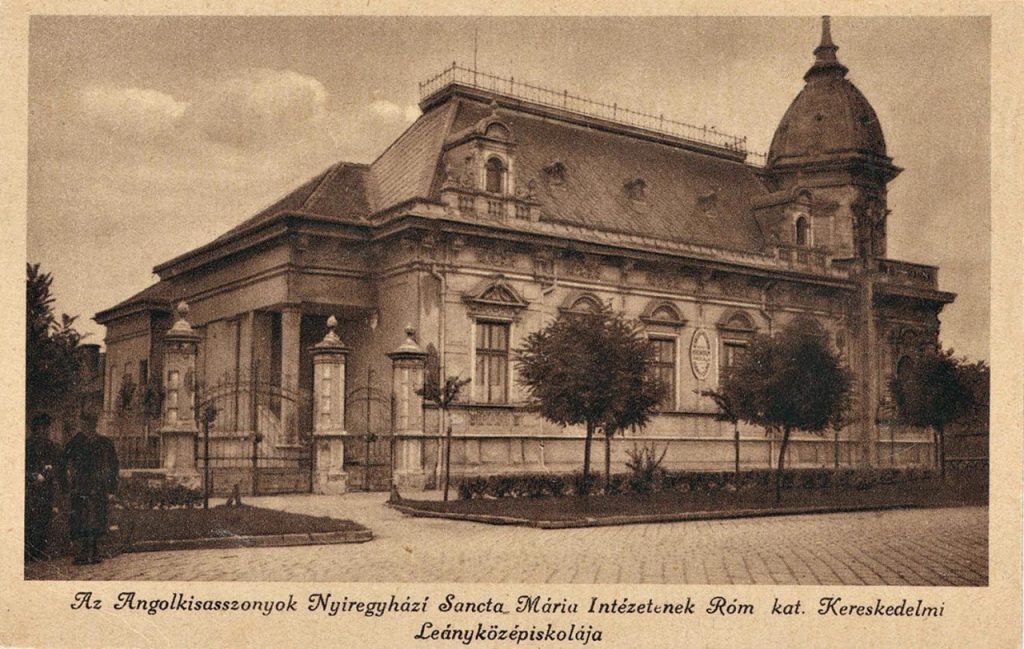
The Roman Catholic Commercial Girls' School of the Sancta Maria Institute of the English Ladies
In 1989, István Seregély, Archbishop of Eger, with foreign assistance, repurchased the nationalised Franciscan friary. In the renovated and expanded building, the Archdiocesan Priests' Social Home began its operation on 13 June 1990.
In 1990, the St. Lazarus Chapel, established in the Jósa András County Hospital, was blessed. On 18 August 1991, His Holiness Pope John Paul II made a brief visit to Nyíregyháza during his five-day apostolic visit to Hungary.
In September 1992, the St. Imre Catholic Grammar School began its operation – organised by Parish Priest István Kis – and its dormitory was expanded with a new building in 1994.
In 1993, two years after Pope John Paul II's visit to Hungary, a new diocese was established with its see in Debrecen, and the Our Lady of Hungary Church in Nyíregyháza was elevated to the rank of co-cathedral.
On 30 April 1993, the Nyíregyháza group of the Association of Christian Intellectuals was formed. In 1995, the Camillian friars settled in Nyíregyháza-Borbánya, followed by the Camillian Sisters in 1997.
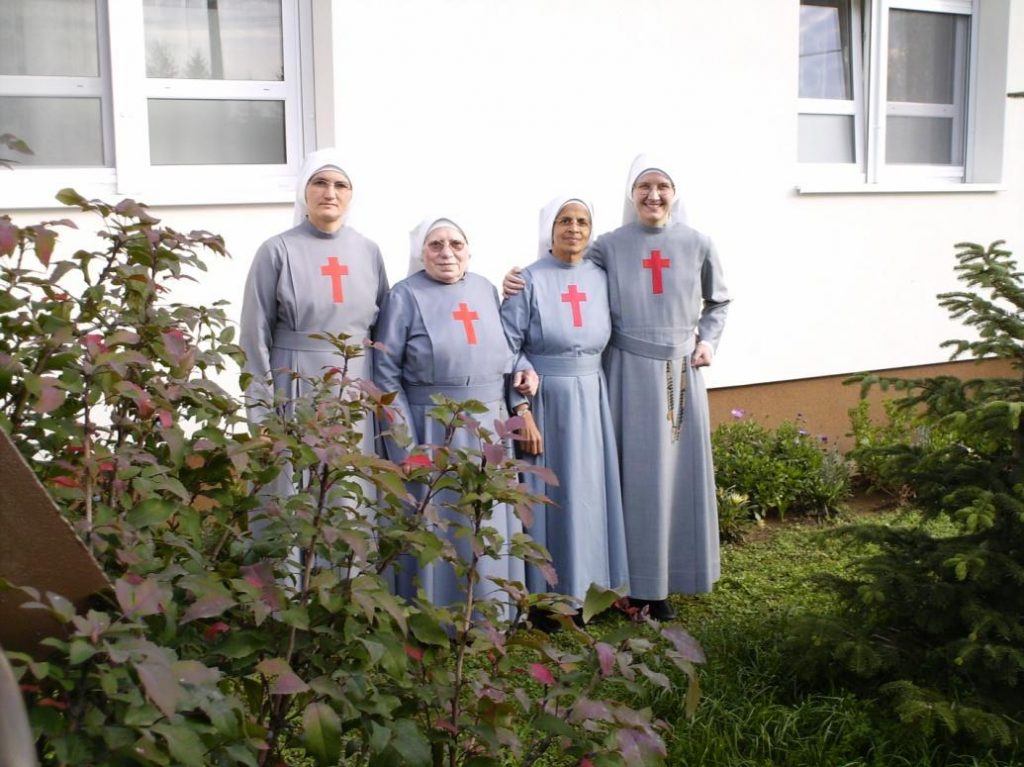
Camillian Sisters in Nyíregyháza-Borbánya
In 1997, the Diocesan Pastoral Institute (ELI) was built, which also housed the Episcopal Vicariate and the co-cathedral parish office.
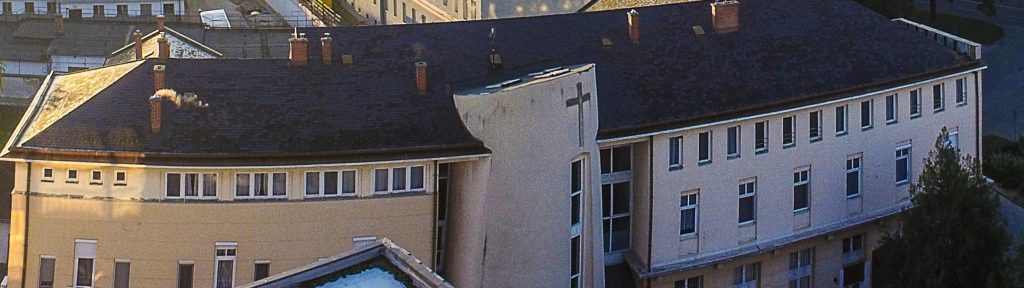
The Parish Office of the Our Lady of Hungary Co-Cathedral and the ELI building complex in Nyíregyháza
In 1998, the new chapel of St. Imre Grammar School was built, which also serves as the church for the faithful of Jósaváros. It was blessed by Diocesan Bishop Nándor Bosák on 5 September 1998.
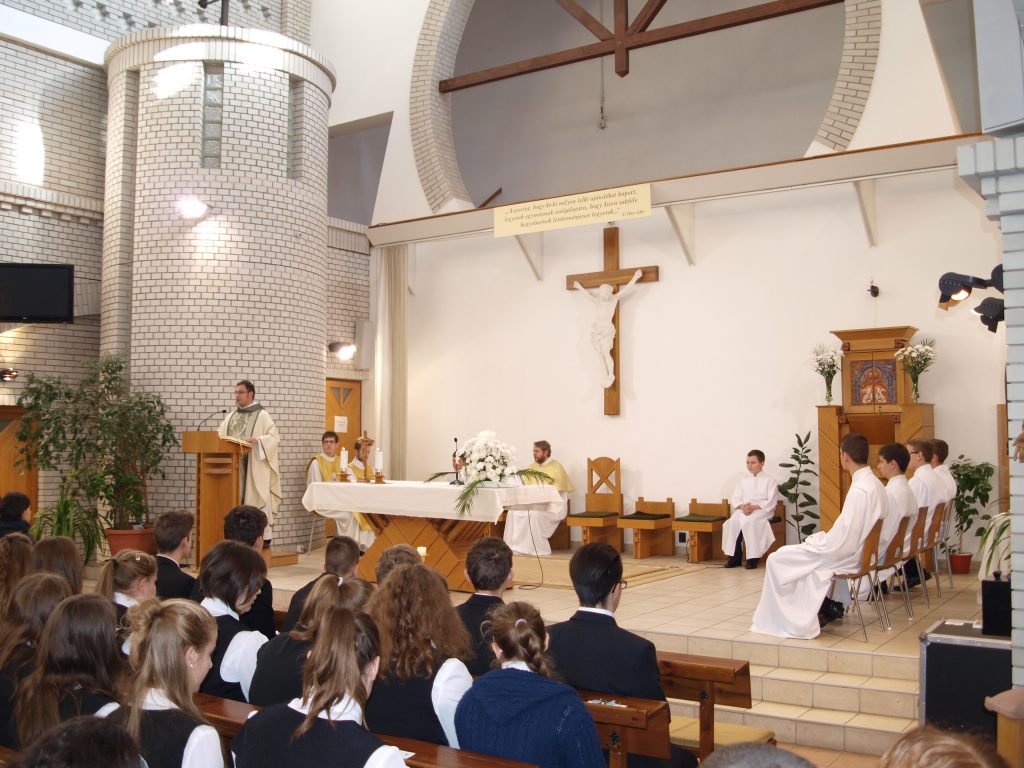
The Chapel of St. Imre Grammar School
In Nyíregyháza in 2001, out of the town's 119,000 inhabitants, 33,500 declared themselves Roman Catholics.