
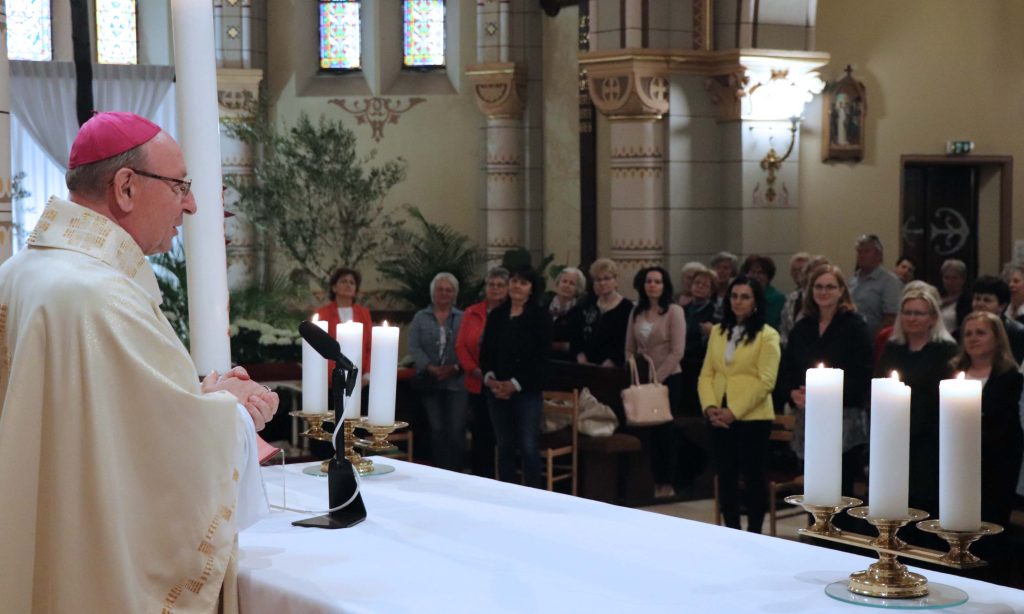
On 13/04, at the Diocesan Women's Retreat held this year in the Co-Cathedral of Our Lady of Hungary in Nyíregyháza, Dr. Miklós Papp, a moral theologian and Greek Catholic priest, presented his thoughts on female existence in two lectures and a homily delivered during Holy Mass. The report on the retreat can be read HERE.
Below is a brief summary of Father Miklós's lectures.
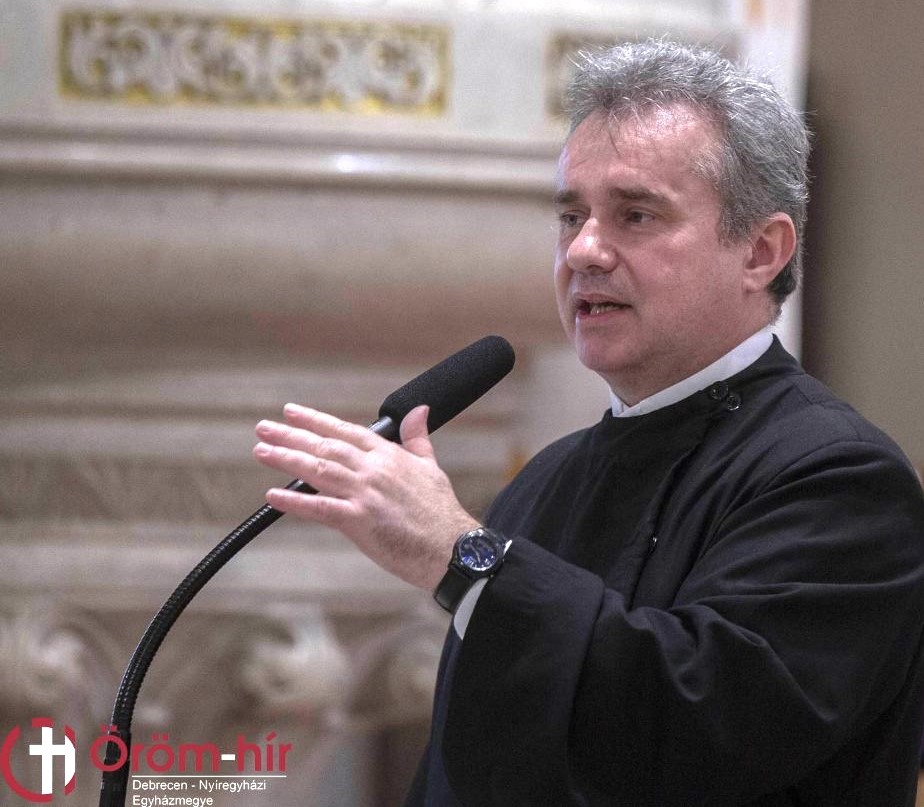
Our lives are complex. No one should think of themselves simplistically, as merely a worker, merely sick, merely divorced, etc. We must not think of ourselves in a simplistic way. Our God is complex; there is simplicity in Him: God is one, and also complexity. If we are created in God's image, then we must not think of ourselves in a simplistic way either.
In his lecture, Miklós Papp spoke about what makes a woman's life function well. The speaker illustrated this with the Wellness model. Just as a wheel has a hub and spokes – 'legs' – women also stand on multiple 'legs'. Father Miklós spoke about these 'legs', then about the axle, the soul, the woman's core, and her spirituality.
Why is the multi-legged model good? We are well when our physical condition, security, emotional, intellectual, family, communal, social, cultural life, environment, and religion are in order.
Based on the wheel model, one can understand, for example, why a sick female teacher can still work. Although sick, her family, intellectual, spiritual life, home, religion, etc., are in order. The wheel model clearly shows that if a spoke is damaged (one of your 'legs' limps) – the wheel jolts – but it can still rotate.
This shows that when a husband leaves his wife, the wife does not collapse, because her husband is not her everything. And not everything is the family – sometimes we idolise the family too – not everything is work, etc. Everything is God. Conversely, the model shows why it is not good if someone puts all their eggs in one basket: if everything is work, everything is my husband, my child, my beauty, etc.
It is good to examine each of our 'legs' to see how they stand. This helps us understand how we are doing and which one needs more attention for our lives to rotate more smoothly.
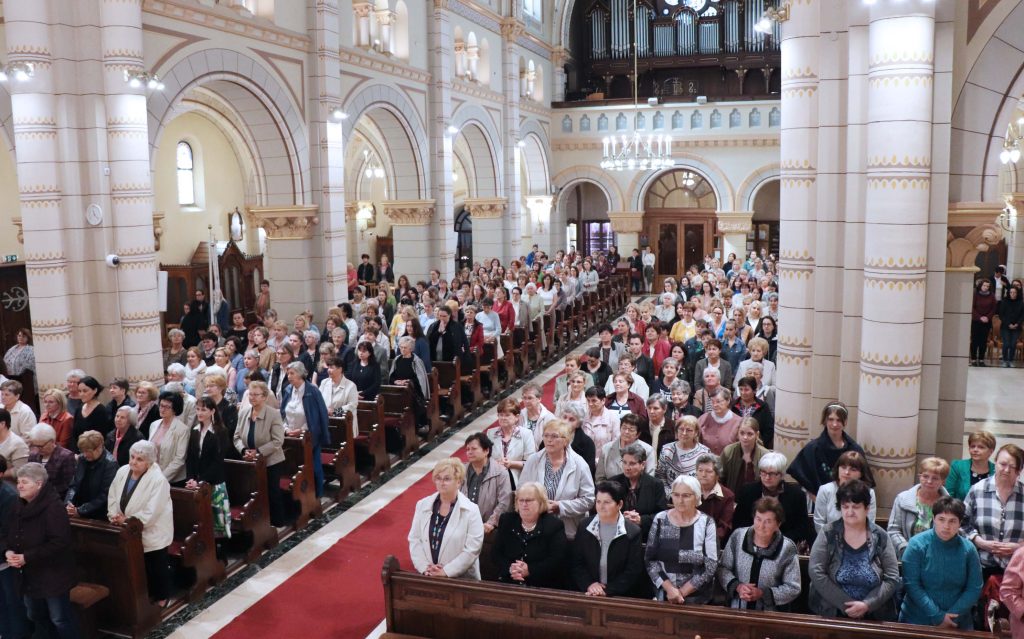
Plant flowers! For us, flowers symbolise the remnants of the Garden of Eden
Father Miklós then spoke about some of these 'legs' and offered advice. First, he highlighted the home, where it is good for a person to feel comfortable. The speaker mentioned a segment of this, the garden, the flowers. When the Bible describes God blessing humanity with every good thing, it uses the image of creating humanity in a garden. "In the cool of the evening, man walked with God in the garden."
The garden also has theological significance.
When we plant a garden, plant flowers, we invoke God, that God may be with us among the flowers. Behind the flowers, we can see the Provident Father.
When we face surgery, suffer, or have family or workplace problems: Peace! Flowers bring the peace of the Provident Father. We should surround ourselves with flowers.
Gardening spread from monks who cultivated gardens in the centre of their monasteries, but for them, this did not mean relaxation; rather, they walked among the remnants of the Garden of Eden in prayer.
In the iconography of the Parable of the Ten Virgins, the five wise virgins and the bridegroom are depicted in a flower-filled garden. For us, flowers represent the remnants of the Garden of Eden. It is good to sit, pray among the flowers, tend and water them, because it has a positive effect on our souls. Always see the Provident Father in them!
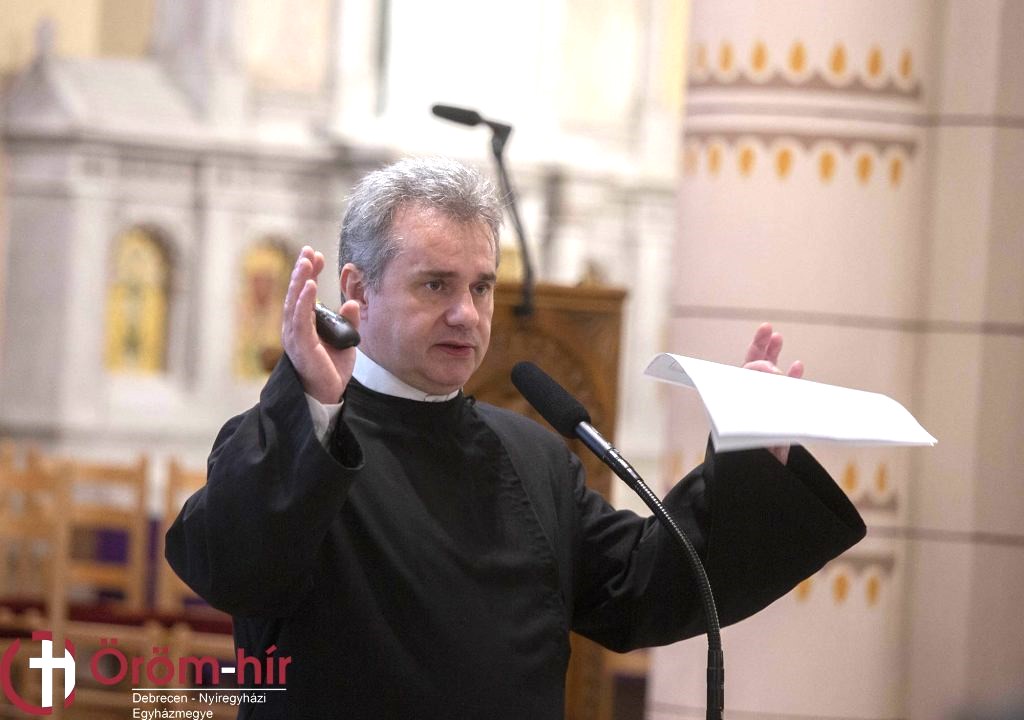
To be well-groomed, to bring God's beauty into the world, this too is theology
The well-being and grooming of the body are very important. A woman should not claim to be spiritually well when her hair is greasy, she doesn't walk with a straight back, and dresses untidily. Women are more psychosomatic than men, meaning their soul – both their joy and their troubles – is more visibly reflected in their body. For women, grooming is very important for their own sake. We have many problems with self-love, which is especially characteristic of Christians. The basis of self-love does not mean that I am so satisfied with myself, but that I am good in God's eyes. God loves me, so I should love myself too.
Attention should also be paid to clothing. A woman should be well-groomed for her own sake, but also for the sake of her husband, they should pay attention to this important matter.
Men meet impeccable ladies at work every day, while their wives "let themselves go" at home. It is a typical case that after a woman marries and has children, she neglects herself and then wonders why her marriage falters. This must be taken seriously.
A woman should be attractive to her husband.
Evolution's trick is that the male eye believes what is more beautiful is also better.
A third important aspect is that women should pay attention to themselves for the sake of their children, because they need to pass on the right clothing culture and example, and then children will more easily find partners for themselves. Fates are crucified because women do not take this into account.
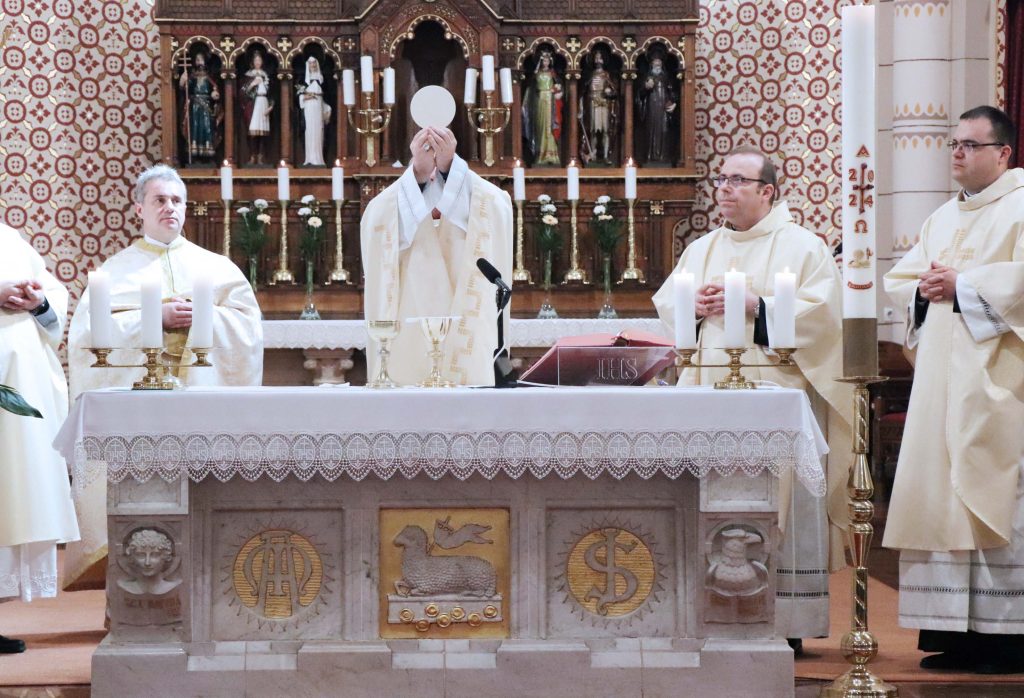
Dressing is not just culture, but also liturgy
When we dress, we also dress for God. Dressing is not just about fashion or sexuality, but about God. When a priest puts on liturgical vestments before Holy Mass, he puts them on for God.
Through Baptism, everyone is somewhat a priest, everyone presents the liturgy of their own life.
Every human being is an icon of God. Through their grooming and attire, a person brings the Gospel, the Good News, into the world. If we are not at all attractive, why would anyone want to belong to us, to our Christian communities? Our grooming always carries the belief that Easter triumphs, not disorder, dirt, or chaos.
Our body is meant for love
Health also belongs to the body. Our body is sacred. Do we say this enough? You cannot do whatever you want with your body! Our body is meant for love. Let us have true joys, whether through eating or our moral sexuality. Let us rejoice in bodily pleasures. We do not have a religion that promises we will be freed from our bodies, but one that God also takes seriously. He became flesh, and when He is resurrected, He has a spiritual body, just as our bodies and gender will remain after the resurrection.
One cannot be without joys
It is not good to be with someone who cannot rejoice in their existence. But it is good to be in the company of someone who loves life. The joy of existence is not psychology, but Easter. We are redeemed.
A Christian is one who loves to exist.
God created us for joy; we have the Gospel. One who has no legitimate, true joys will seek illegitimate, sinful joys for themselves, because joy is necessary. Children too should see that their mother loves to exist.
Wounds acquired for love are sacred wounds
The wounds we acquire for love are sacred, just like the wounds of Christ on the cross.
When your body has worn out in old age because you worked hard for your family, those wounds are sacred. Wounds received for a child are sacred wounds. Wounds due to sin, however, do not deserve respect. Let us honour our sacred wounds! One looks differently at an illness acquired for love. Nerves can also fray at work, but these too are sacred wounds.
Family
The family is not static; it is constantly growing. The mustard seed planted at marriage continuously grows. We have initiated the Sacrament of Matrimony, we receive blessings for it throughout our lives, just as with the Sacrament of Baptism. Sacramental marriage does not seek to lull us to sleep, but to spur us on to growth.
We must love one another with eros (physical tenderness), philia (intellect), and agape (spirituality). One must be united in marriage with all three, and this will remain until the end of our lives. In the family, my spouse is the most important, and then come the children.
In the realm of culture, theology is also at play. In the ancient Greek world, it was thought that truth, goodness, and beauty belonged together and pointed to God. During the Enlightenment, truth and goodness were separated, and beauty became a leisure culture, a programme.
We should focus on quality beauty and culture. Let beauty be present in our lives!
What do we give our children when they start their own lives? Do we give them sacred objects before which we live a lifetime and pray with our children? We must begin to acquire these icons and sacred objects in time so that our children will have something to inherit.
Becoming a Woman
The official teaching of the Congregation for the Doctrine of the Faith states: "Sexuality defines man and woman not only on a physical level, but also on a spiritual and psychological level, giving a specific character to every manifestation." Not only is our body male or female, but so is our soul. And our gender will remain after the resurrection.
Become a woman in a way that you feel good in your own skin! This is a lifelong task.
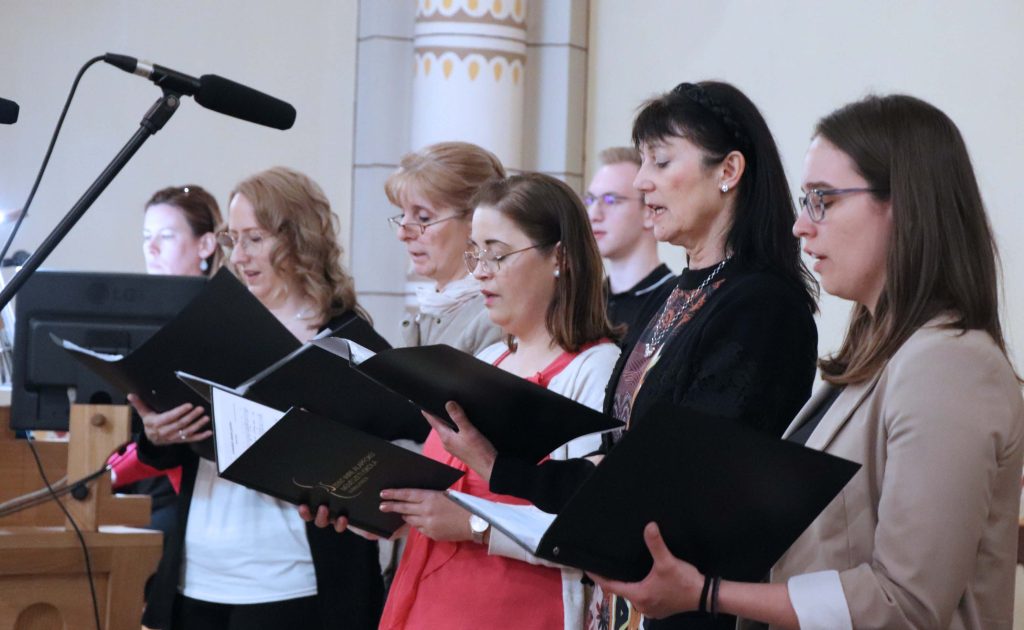
The stages of becoming a woman change approximately every twenty years. During the first twenty years, we are not yet mature women. Then we start a family, become mothers, soften, and nest. In the mid-life stage, we leave our nest a little and no longer focus solely on 'my husband, my child', but love in a broader circle: I visit the sick, work in Caritas, help those in need, join a choir, etc...
For example, a mother should not remain only a mother. One must leave the nest! A woman who does this becomes a mature woman, a dame. Unfortunately, fewer and fewer women are dames.
A dame does not neglect herself; she is professionally and spiritually present in life and loves in a broader circle.
So, we stand on multiple 'legs'! A woman's life will be stable if she pays attention to every 'leg' and does not stake her life on just one. The garden, flowers, home, grooming, physical health, eros, philia, agape, setting boundaries, quality culture, becoming a woman, loving more broadly – all these belong to us for our lives to function better.
In his second lecture, Father Miklós Papp spoke about the axle of the wheel, its centre, which is our soul, our spirituality. All the 'legs' are in vain if our soul is not in order; then the whole thing will not turn.
According to the Maslow model, Maslow's pyramid, we have two types of needs. One is the deficiencies at the base of the pyramid: more health, security, money, etc. The other is at the top of the pyramid, these are growth needs: culture, spirituality, etc. We focus too much on what is missing from the base of the pyramid. Instead, let us concern ourselves with where we can grow.
One who is grateful is always stronger, can endure more
Without prayer, the wheel does not turn. But unfortunately, in this too, we focus too much on ourselves. Our prayer should be a complex event. Let us glorify God, and this will have a positive effect, we will not be depressed. It's like standing before the sun, just letting it shine on me. We must give thanks. One who is grateful is always stronger, can endure more. One who asks in prayer plans. A person becomes stagnant when they do not plan. Furthermore, in prayer, we ask for and receive forgiveness, and we intercede for others, and from this, too, we receive strength. Therefore, one who does not pray does not receive all these things.
To love in the field
The Bethlehem determination is about God's thinking that He wants to come close to people, even if He receives a stable or a cross. God empties Himself and takes on everything. To serve in the field is an honour. It is a great thing to take myself into the field, to serve my husband, my workplace, even if I am in the field in a broader sense. Let us adopt this from God. Let us be in the field. When I love in the field, I do a great thing.
Everyone's life calling is to love in the field.
For this, women have a special gift. There is embracing, merciful, maternal love and the tougher, masculine love that pushes one out of the nest. Love is polarised, so both are within us.
The pinnacle of feminine vocation is the experience of "maternal" love, which is experienced even by those who have not given birth to a child. Mother Teresa did not give birth to children, yet everyone called her Mother.
One does not become a mother by giving birth to a child, but by caring for those whom God brings before her. This is the feminine programme. Mother Teresa understood Christ's words: "I thirst!" When she quenched people's physical and spiritual thirst, she quenched Christ's thirst.
It is not important how much we give, but how much love we put into the activity we perform – stated Father Miklós Papp, and then he also spoke about what to do if there is a break in our lives, and how mysticism, the experience of God, and the experience of faith enrich us.
Ágnes Kovács
Joy-News Press Office/Diocese of Debrecen-Nyíregyháza