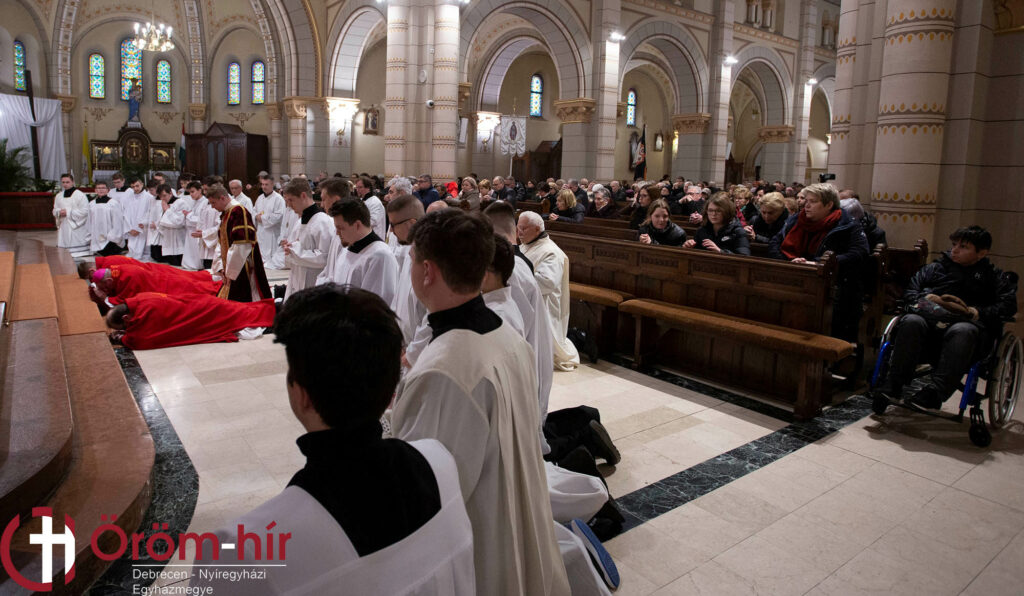
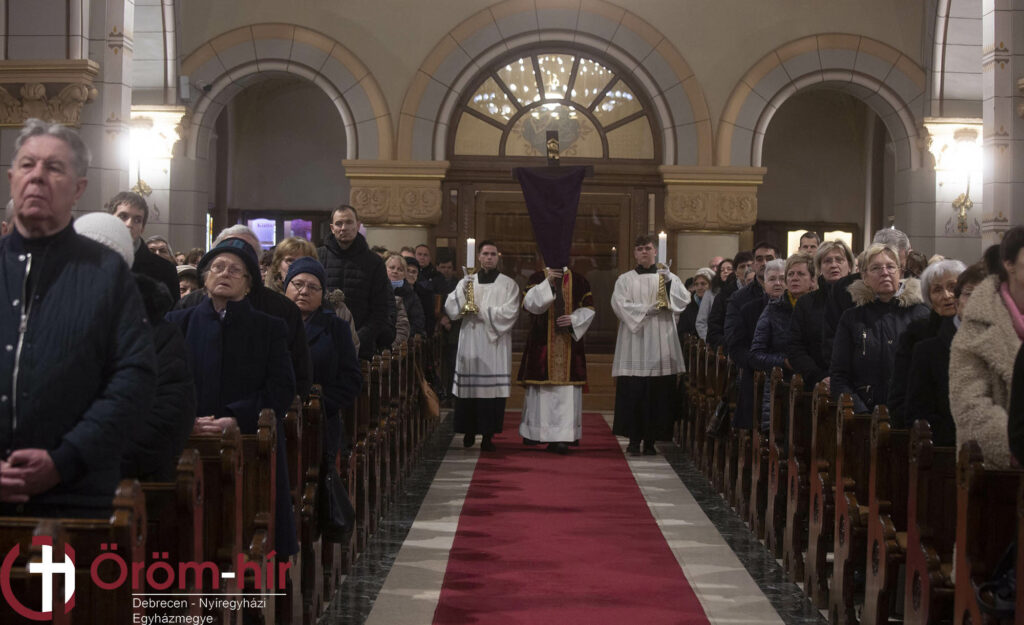
At the beginning of the service, the priests wearing red vestments and the assistants entered the church in silence, where they prostrated themselves before the altar, praying and expressing their veneration before the sacrifice of Jesus Christ on the cross.
The service consists of three main parts: the Liturgy of the Word with readings and General Intercessions, the Veneration of the Cross, and Holy Communion.
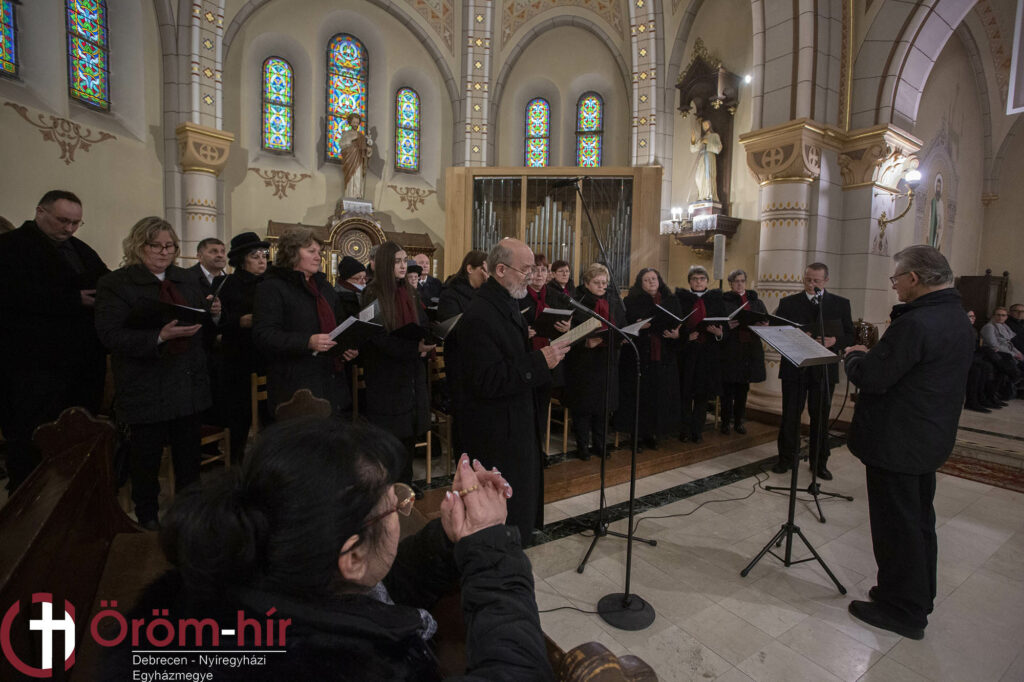
During the Good Friday service, the readings reveal the mystery of Jesus' suffering to us. The dramatic climax of the Liturgy of the Word is the Passion narrative according to the Gospel of John (Jn 18, 1–19,42), which was performed by the Bárdos Lajos Choir of the parish under the direction of József Gebri.
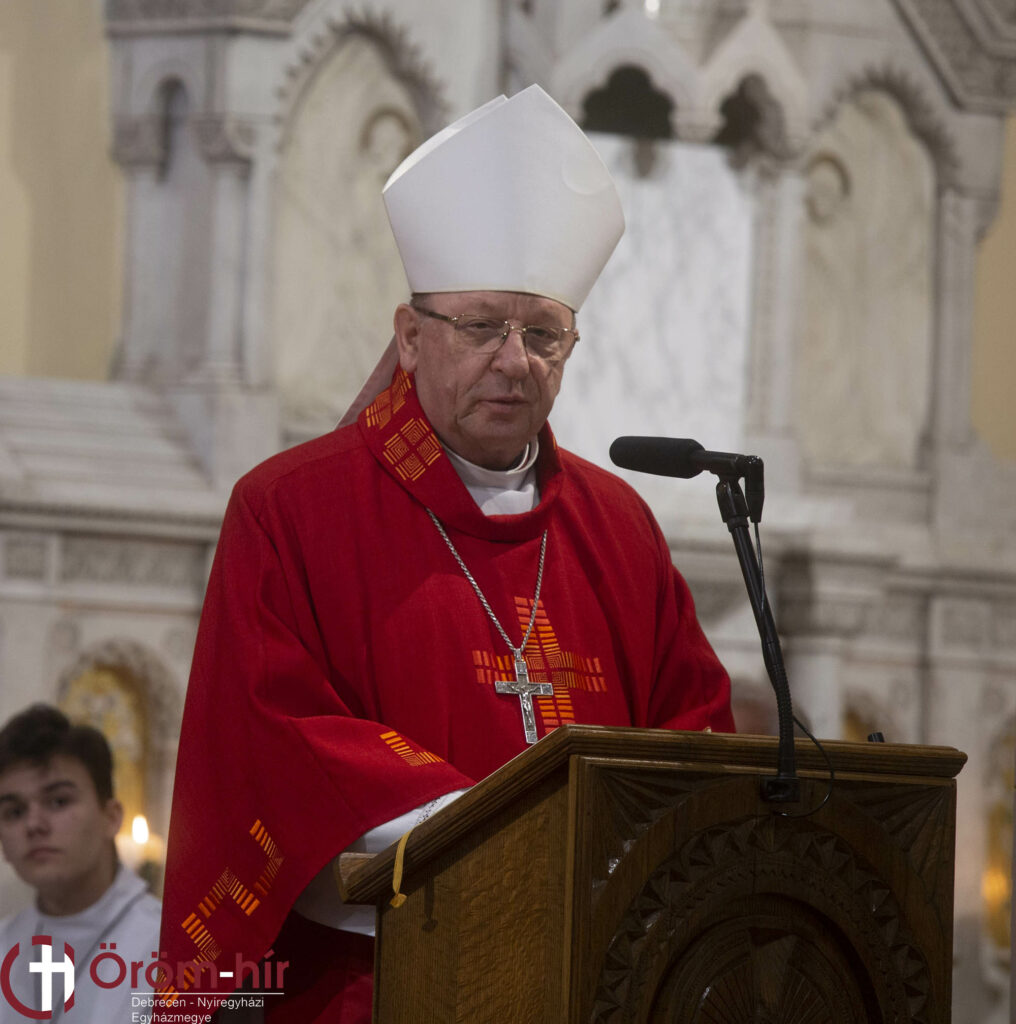
This was followed by the reflection of Diocesan Bishop Ferenc Palánki, who some years ago began a series on Jesus' last seven words on the cross during his Good Friday reflections. This year, we reached the fifth saying, which can be read in the Passion narrative according to Luke the Evangelist.
“What might Jesus have been thinking when he said: 'Father, into your hands I commend my spirit' (Lk 23,46). They mocked and blasphemed him: 'If you are the Son of God, come down from the cross!' (Mt 27,40); 'He saved others,' they said, 'let him save himself if he is the Messiah, the Chosen One of God'; 'If you are the King of the Jews, save yourself!' (Lk 23,35, 37). How much the mockery must have pained Jesus, because they spoke of his relationship with the Father in a blasphemous way. They questioned God as to why He did not save His Son, if He was truly His Son.
We must hear this saying as Jesus rejecting this temptation, gainsaying it, and not coming down from the cross, not showing His divine power, not seeking revenge. Let us reflect on this.
Jesus remains on the path of love, the path of complete, perfect trust, the path of total surrender, of self-giving. With this, He sets an example for us. How often are we too in a situation where we say, we want to come down from the cross! There's no time for pain. Why did I get this illness, why is my life difficult? How much easier it is for others! Jesus also gave an example for this: let us surrender to the Heavenly Father with complete trust!
“Father, into your hands I commend my spirit.” This trust stemmed from His loving relationship with the Father. Jesus dared to die out of love for the Father, dared to die, because He knew that the Heavenly Father would save Him before or after His death, and would not abandon Him. "In the days of his earthly life he offered prayers and supplications with loud cries and tears to the one who was able to save him from death, and he was heard because of his reverence" (Heb 5,7-9).
But how could He save Him from death when He died? Precisely by raising Him, and with Him, us human beings too, and showing humanity's eternal destiny: that God intended man to be glorified in body and soul, and thereby to glorify God. We received an invitation to this, not to anything less, not to this short earthly life, but to something much greater, to eternal love. "And when he had been made perfect, he became the source of eternal salvation for all who obey him." (Heb 5,9)
His death and resurrection encourage us to also dare to trust in God; they encourage us, despite the finite nature of our earthly life, to believe in eternal life, in the resurrection, to dare to surrender to the Father in every situation, to entrust our lives to Him. This is why Jesus undertook death, total self-giving, for us.
May Jesus' saying also be our frequent prayer: Father, into your hands I commend my spirit, my whole life, my being, my loved ones, my family, my communities, I entrust everything to You, because I believe that if it is in Your hands, then it is forever in good hands – concluded Diocesan Bishop Ferenc Palánki his reflection.
The Church's General Intercessions were offered for all humanity, for Holy Mother Church, for the Pope and bishops, for the clergy, for lay and ecclesiastical leaders, and for every individual person alike.
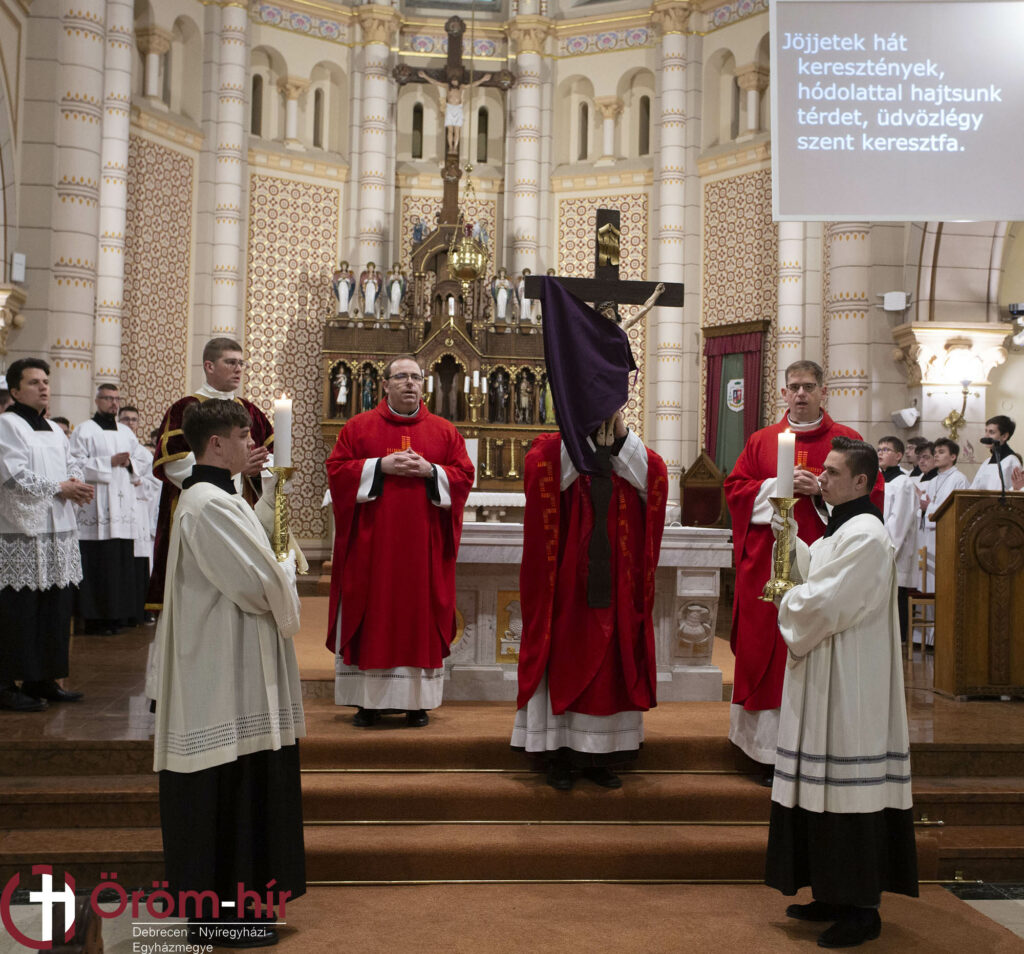
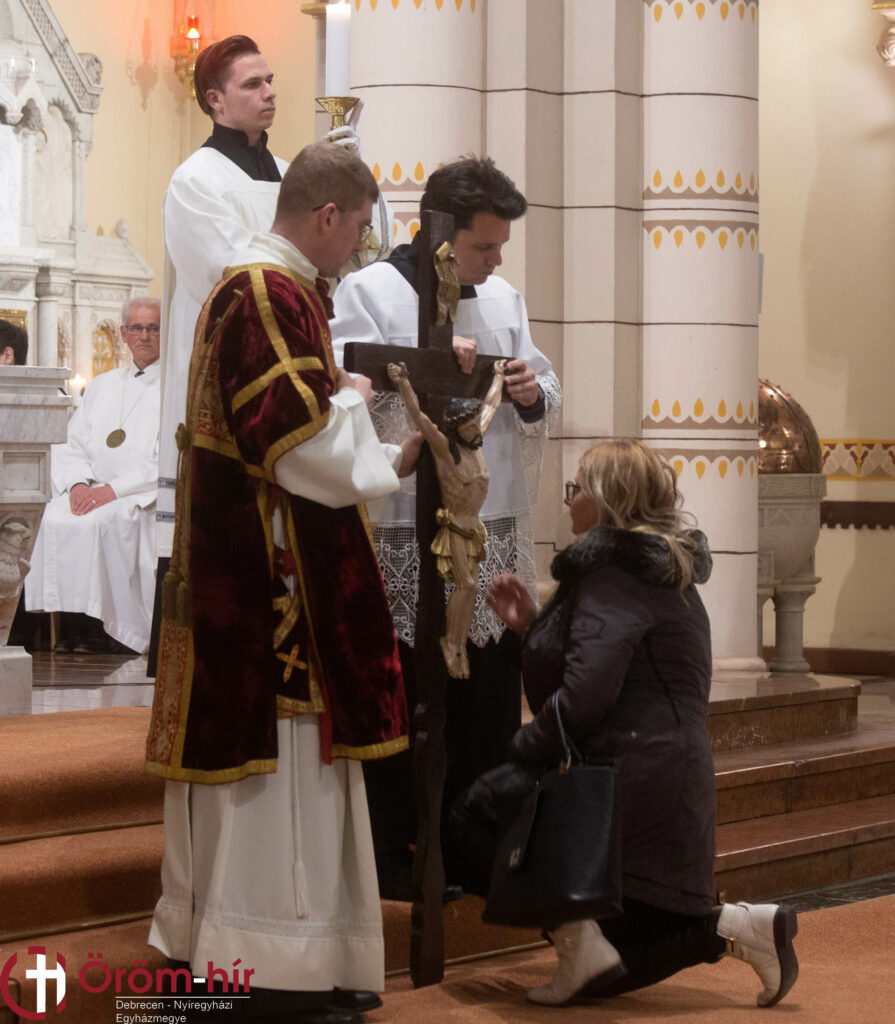
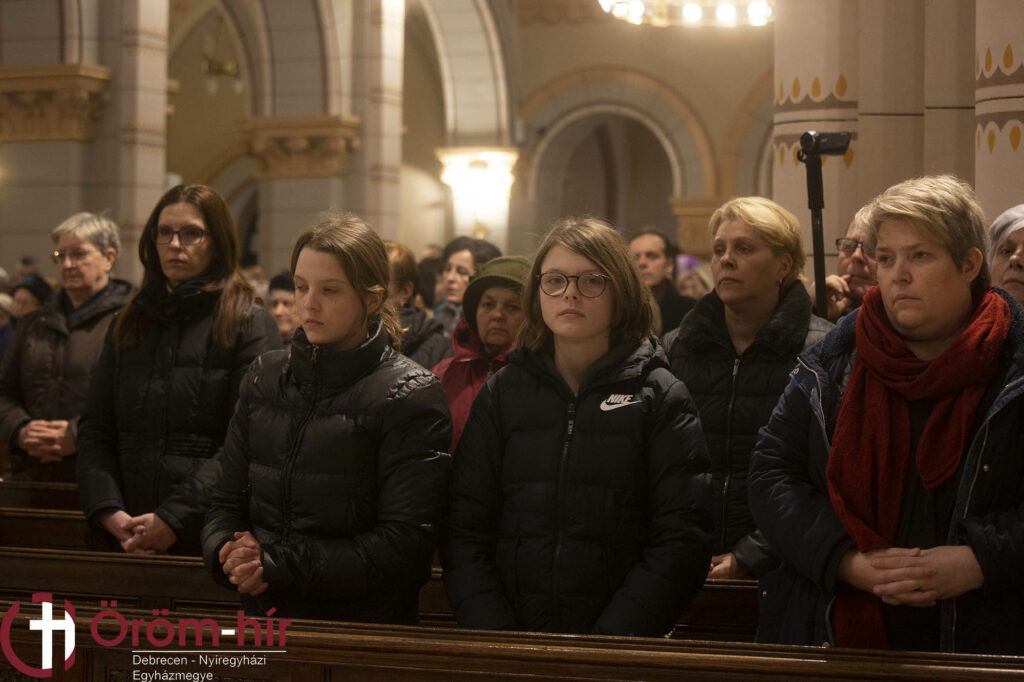
After this, the Chief Shepherd removed the veil from the cross, which had been covered on Black Sunday (the 5th Sunday of Lent), and the faithful venerated the crucifix with genuflections and kisses. In the Veneration of the Cross, Holy Mother Church gives thanks for God's infinite love, forgiveness, and for conversion. He is the one who lives today, and who still suffers for His Church today.
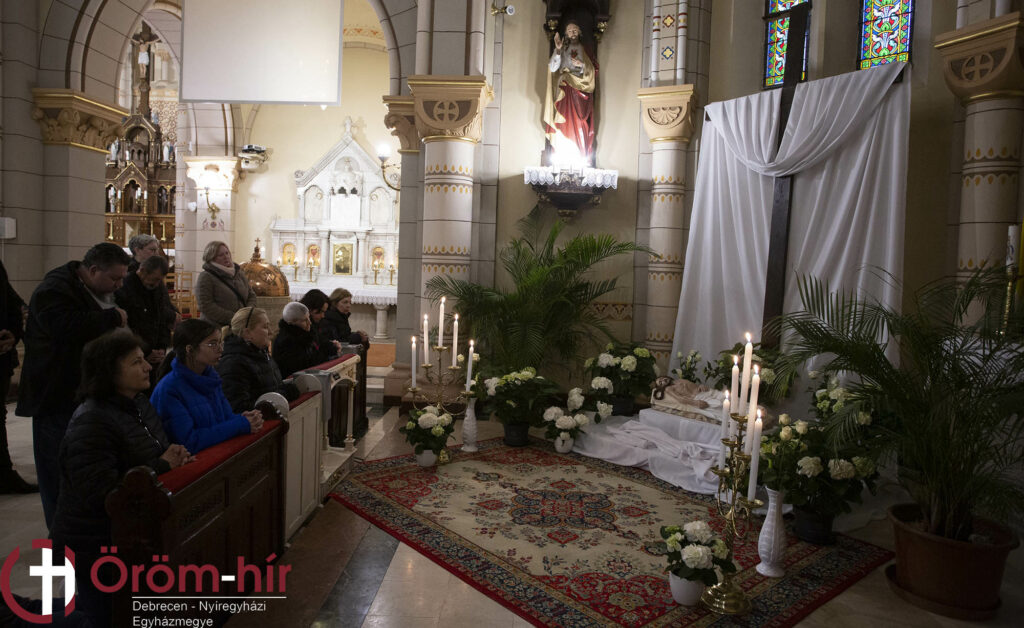
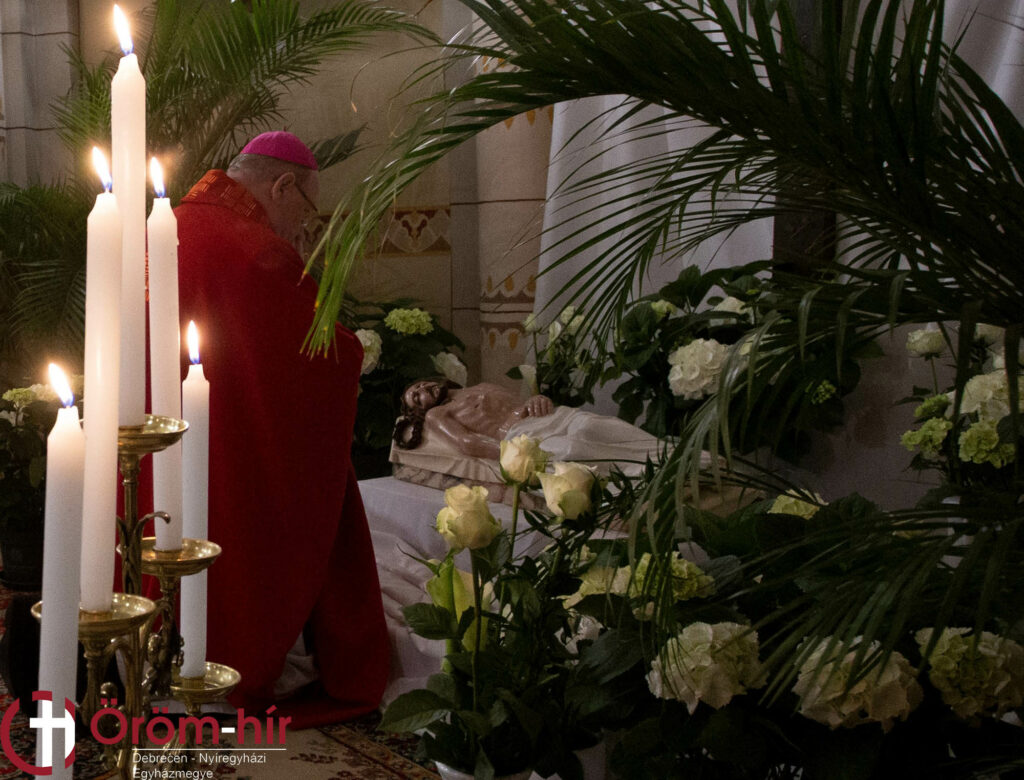
Since there is no Holy Mass on this day, the faithful receive the consecrated host, transformed earlier, during Communion. At the end of the Good Friday service, the Chief Shepherd and the priests, together with the assistants, processed to the Holy Sepulchre and prayed in silence for a few minutes. Subsequently, the faithful also approached the Holy Sepulchre.
Source: Ágnes Kovács – Öröm-hír Press Office/Diocese of Debrecen-Nyíregyháza