
Saint Pope John Paul II issued his Apostolic Letter on the Rosary, entitled Rosarium Virginis Mariae, on 16/10/2002. In it, he formulates concrete, practical advice regarding the manner of praying the Rosary.
The memorial of the Queen of the Rosary (Regina Rosarii), "Our Lady of the Rosary", is on 07/10.
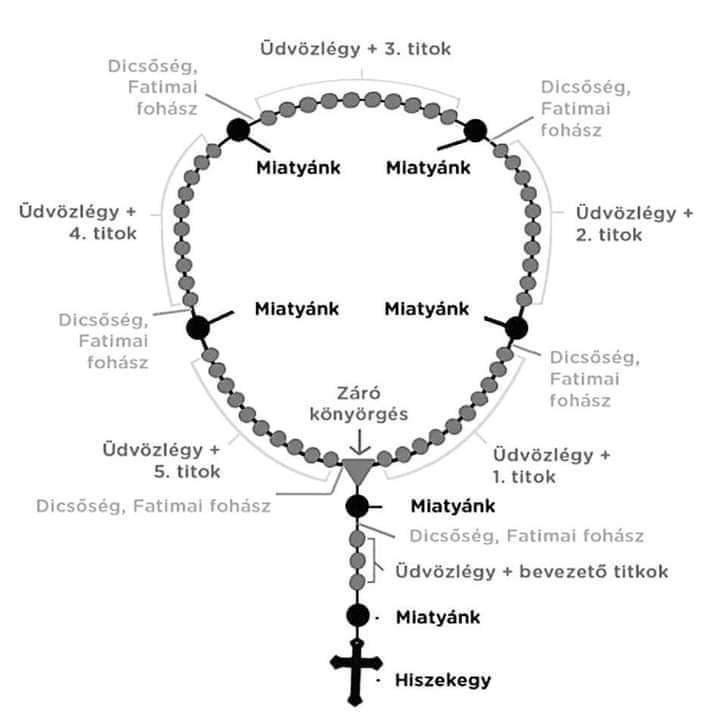
1. The Purpose of the Rosary: Contemplating the Face of Christ
“To gaze upon the face of Christ, to recognise its mystery [...] is the task of every follower of Christ, and therefore ours too. As we contemplate this face, we open ourselves to receive the mystery of the Trinitarian life, to experience anew the love of the Father, and to rejoice with the joy of the Holy Spirit.” (9)
“...the Rosary is directed towards the crucifix: it begins from it and arrives at it, as prayer itself does. For in Christ the life and prayer of believers are centred. Everything proceeds from Him, everything is directed towards Him, everything through Him reaches the Father in the Holy Spirit.” (36)
2. The Name of Jesus
“The focal point of the Hail Mary, as it were, the turning point between the two parts, is the name of Jesus. Sometimes, when recited in haste, this focal point disappears, and with it the connection to the mystery of Christ on which we are meditating is also lost. [...] To repeat the name of Jesus – the only name in which we are given the hope of salvation (cf. Acts 4:12) – together with the name of the Blessed Mother, and as it were to allow Mary to suggest this name to us, is a path of assimilation that leads ever more deeply into the life of Christ.” (33)
3. Understanding the Rosary
“To understand the Rosary, one must delve into the specific spiritual dynamics of love.” (26)
4. Silence
“Listening and meditation are nourished by silence. It is good, after the announcement of the mystery and the proclamation of the word of Scripture, to pause for an appropriate period of time to fix our gaze on the mystery to be contemplated, before beginning the vocal prayer. The rediscovery of the value of silence is one of the secrets for the practice of meditation and contemplation.” (31)
5. The Rosary and Sacred Scripture
“...the Rosary does not replace spiritual reading (lectio divina); on the contrary, it presupposes and promotes it. [...] Through the mysteries contemplated in the Rosary [...], the soul can easily find paths to the entire Gospel, especially if the Rosary is prayed in a special state of sustained recollection. [...] In order that the meditation may acquire a biblical basis and be deeper, it is useful, after the announcement of the mystery, to read a longer or shorter passage from Sacred Scripture, appropriate to the circumstances. Other human words, in fact, never attain the specific efficacy of inspired words. For these are heard with the certainty that they are the Word of God, spoken for today, 'for me'.” (29–30)
6. How to Pray the Mysteries of the Rosary?
“Meditation on the Joyful Mysteries is an encounter with the ultimate motivations and profound content of Christian joy.” (20)
“Each of the Mysteries of Light is a revelation of the Kingdom which is now present in the very person of Jesus. [...] At Cana, it is from Mary's lips that a great maternal exhortation goes out to the Church of all ages: 'Do whatever he tells you' (Jn 2:4). This exhortation introduces well the words and signs spoken by Christ during his public life, and provides a Marian backdrop for all the Mysteries of Light.” (21)
“The Sorrowful Mysteries help the faithful to experience Jesus' death – standing at the foot of the cross alongside Mary – and to delve with Him into the depths of God's love for humanity, and to feel the full regenerating power of this love.” (22)
The Glorious Mysteries “urge the faithful to go beyond the darkness of the Passion and to fix their gaze on Christ's glory in the Resurrection and Ascension. As the Christian soul contemplates the Risen One, it discovers the reasons for its faith (1 Cor 15:14).” (23)
7. Our Father, Glory Be
“The Our Father is, as it were, the foundation of the Christological-Marian meditation unfolded by the repetition of the Hail Marys, and it makes the meditation on the mystery an ecclesial experience even when recited alone.” (32)
“It is important that the Glory Be, as the culmination of the contemplation, be conscious in the Rosary. In public recitation, it could also be sung, to give proper emphasis to this perspective characteristic of all Christian prayer.” (34)
8. Concluding the Rosary
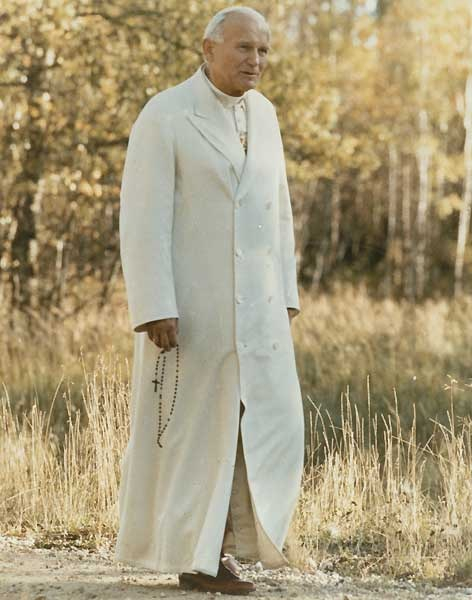
“At the end of the Rosary, we pray for the intentions of the Pope, so that the gaze of the praying soul may expand to the needs of the whole Church.”
“...the soul feels the need to add, at the end of the Rosary, during which it has felt so much of Mary's maternal help, a praise to the Blessed Virgin, be it the Salve Regina or the Litany of Loreto. This is the crowning of an inner journey, through which the believer has entered into living communion with the mystery of Christ and His Blessed Mother.” (37)
9. Temporal Distribution
“...the weekly distribution gives a particular spiritual character to the different days, similar to the Liturgy which colours the various seasons of the year. According to current practice, Monday and Thursday are dedicated to the Joyful Mysteries, Tuesday and Friday to the Sorrowful Mysteries, and Wednesday, Saturday and Sunday to the Glorious Mysteries. Where can the Mysteries of Light be inserted? [...] Since Saturday is traditionally a Marian day, it seems advisable that the Joyful Mysteries, formerly prayed on Thursday, should be transferred to Saturday, and the thus freed Thursday could be the day for the Mysteries of Light.”
“...care must be taken that the Rosary is always considered and performed as contemplation. In this way, as a complement to the Liturgy, the Christian week – whose focal point is Sunday, the day of the Resurrection – becomes a journey through the mysteries of Christ's life, and Christ Himself appears as the Lord of time and history in the lives of his disciples.” (38)
10. “Cast your burdens on the Lord”
“...let us bring with us into our encounter with the Redeemer's sacred humanity our concerns, our troubles, our work, our plans, all that defines our lives. 'Cast your burden on the Lord, and He will sustain you' (Psalm 55:23). To meditate with the Rosary means to entrust our concerns to the merciful heart of Christ and His Mother.” (25)
+1 piece of advice from Blessed Pope Paul VI
“The recitation of the Rosary, by its very nature, calls for a quiet rhythm, a certain contemplative lingering, which helps the praying person to meditate on the mysteries of the Lord's life, seen through the heart of her who was closest to the Lord, and from which an inexpressible richness springs.” (12)
“The Rosary is my favourite prayer. A wonderful prayer! Wonderful in its simplicity and its depth (...). As we recite the words of the Hail Mary, the principal events of Jesus Christ's life pass before our spiritual eyes. [...] and connect us in living communion with Jesus – we might say – through the heart of His Mother. At the same time, our heart can embrace in these decades of the Rosary all that constitutes the life of an individual, a family, a nation, the Church, and humanity. Individual concerns, the concerns of our neighbour, and especially those closest to us, to our heart. Thus, the simple prayer of the Rosary gives rhythm to human life.” (Saint Pope John Paul II)
Source: John Paul II: Rosarium Virginis Mariae
Joyful News Press Office/Diocese of Debrecen-Nyíregyháza