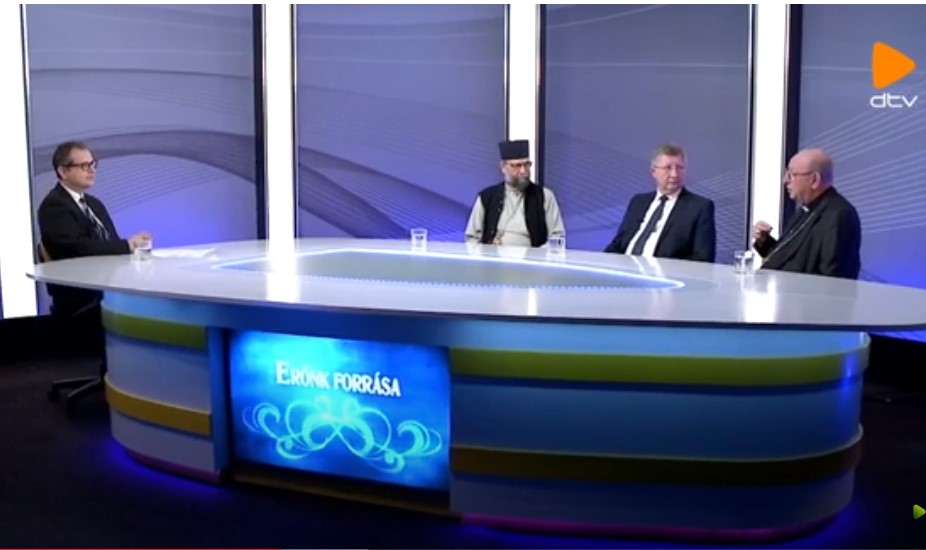
Preparing for Pentecost, the feast of the outpouring of the Holy Spirit, Bishop Ferenc Palánki of Debrecen-Nyíregyháza, Greek Catholic Archbishop-Metropolitan Fülöp Kocsis, and Dr. Károly Fekete, Transtiscan Reformed Bishop, shared their thoughts on Pentecost in the denominational magazine programme 'Erőnk Forrása' (Source of Our Strength) on Debrecen Television.
The conversation was led by Ferenc Vojtkó, television editor and presenter.
Ferenc Palánki: The process began when Jesus addressed the simple fishermen: 'Follow me, and I will make you fishers of men.' Perhaps they didn't even understand what this word meant, but Jesus addressed them with such authority that they left everything and followed Him. What a great change occurred in Peter's life from the moment he was a simple fisherman who could neither read nor write, to eventually becoming someone such that when he walked down the street, people would place the sick on the pavements so that at least his shadow might fall on them and heal them (cf. Acts V:15). But this was not Peter's merit. Before the outpouring of the Holy Spirit, Peter faltered, denied knowing Jesus, but in fact, he truly didn't know Him until he received the Holy Spirit. From then on, he knew who Jesus was; he could speak in such a way, represent the love of Jesus among people in the world, that as a result, they converted.
Fülöp Kocsis: It is the Spirit who not only transformed individuals, but it is also remarkable that the 3,000 people who converted then quickly formed a community. Thus, the Spirit not only pervades each individual but also forms a community. The prerequisite for this was that Jesus shaped, taught, introduced, and, as it were, prepared them, and then promised them that He would send the Holy Spirit, who would then fulfil the work of Jesus that signifies our salvation.
Károly Fekete: The Spirit has a dynamic that means it imparts strength and possesses power. When Jesus taught, His adversaries – the Pharisees and scribes – observed that He did not speak like a wise teacher or a rabbi, but as one whose words carried power and authority. In the event of Pentecost, in the outpouring of the Spirit's power, we see not just a strong man in Peter, who is politically powerful, but a preacher with penetrating words speaks forth. Peter's words and his presentation of connections possess such a recruiting power that it becomes the cohesive force to shape the Jerusalem multitude, gathered from various nations speaking different languages, into a community, a congregation, an ecclesia. This is the power of the Spirit, its community-building authority, the outpouring of which, through Peter, reached deep into people's hearts. Thus, the outpouring word is still capable of this today; it has power.
The conversation can be viewed in the video below:
Good News Press Office/Diocese of Debrecen-Nyíregyháza